



Okay, so check this out—blockchain explorers feel intimidating at first. Whoa! They do. But once you know what to look for, you stop guessing and start verifying. My instinct said this would be tedious, but actually it’s kind of empowering. Seriously, it changes how you interact with wallets and dapps.
First impressions matter. Hmm... the hash string looks like gobbledygook. Yet that string is the single source of truth for a transaction. Short story: if you can read a few key fields you can tell whether a transfer succeeded, a smart contract behaved as expected, or something shady happened. On the other hand, explorers present lots of data that can distract you—so here’s how to cut through the noise.
Start with the basics. Transaction signature. Slot number. Status (Success or Failure). Those are the three quick checks whenever you paste a signature into a Solana explorer. Wow! If the status is "Confirmed" or "Finalized", it means the network accepted it and you're probably good. But actually, wait—there's nuance: "Confirmed" in some contexts can still reorg, though reorgs on Solana are rare.
Let's walk the typical flow. Paste the signature. Look at the timestamp first to sanity-check timing. Then check the fee and the list of accounts involved—those tell you who paid and who was affected. A long list of accounts often means a program interaction, not a simple wallet-to-wallet transfer. My first instinct used to be "Did I just lose money?" and then I learned to read the accounts instead.
Now some color on logs. Transaction logs are where the contract leaves its footprints. Really? Yes. They include program logs, token instructions, and error messages. If you see "Instruction: Transfer" you can be pretty sure a token move happened. If you see program-specific logs, you need to recognize which program it is—this is where explorers like Solscan help by labeling things.
Here’s a practical tip. Check token balances before and after. It’s concrete evidence. Use the formatted token view to avoid reading raw lamports. That conversion matters—1 SOL is 1,000,000,000 lamports. Whoa! People miss that and freak out. I'm biased, but always cross-check balances; it saves headaches.
About fees. Sol fees are low, usually. But sometimes they spike. Watch both fee payer and compute units. If a tx uses a lot of compute units, it might be a heavy contract call. That could imply delayed execution under load. Hmm... I'm not 100% sure of the exact thresholds for "expensive" across all programs, but generally anything way above typical fees is worth a second look.
Now a note on confirmations. Solana has multiple confirmation levels. Finalized is the strongest. Confirmed is weaker but often good enough for UX. On the other hand, finalization is the guarantee you want for larger moves. Really? Yep. If you're moving large balances, wait for finalized blocks. If it's a tiny swap, many people accept confirmed states.
Why Solscan? A short, personal take
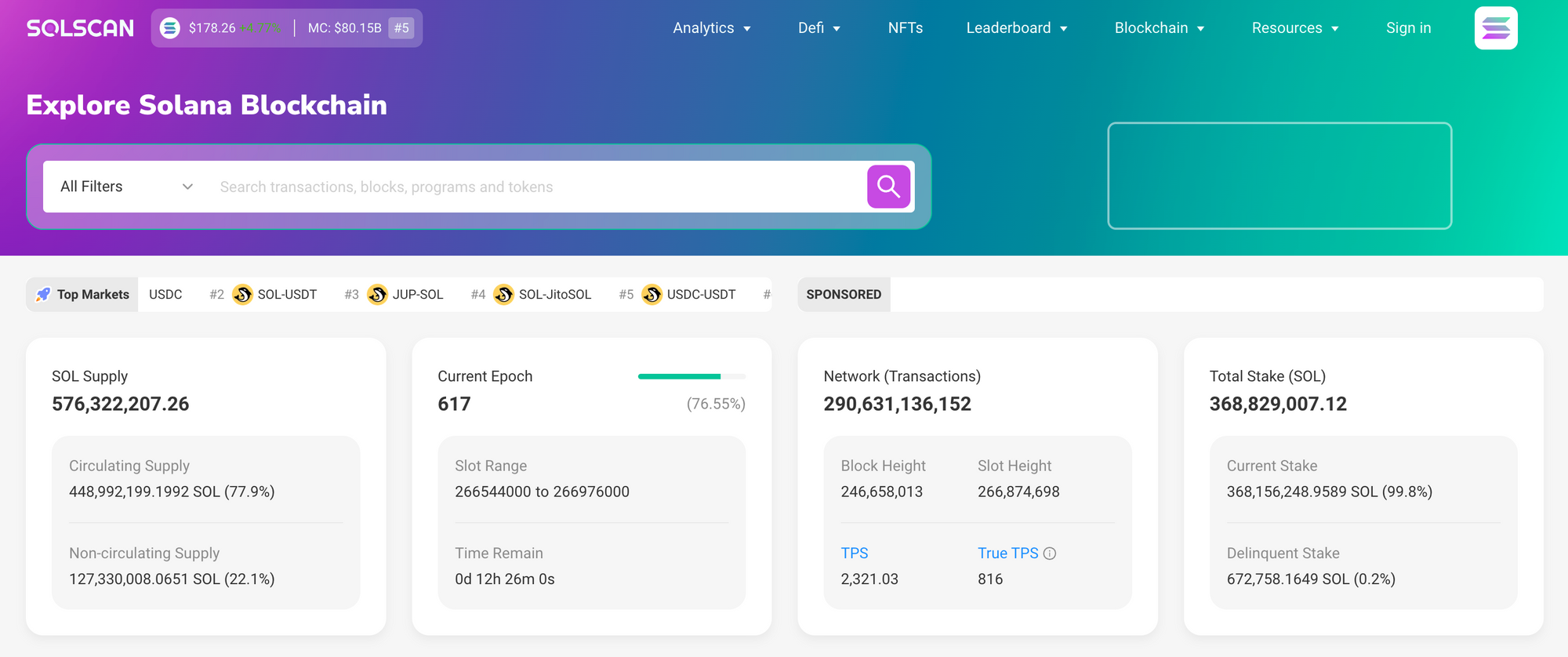
I use explorers all the time in my workflow and I've relied on Solscan for quick lookups, especially when debugging program interactions. Check it out at this solscan explorer official site if you want a friendly UI that labels programs and token transfers clearly. Wow! The UI gives readable transaction logs and token movement breakdowns, which is clutch. On one hand, many explorers show the same raw data. On the other hand, labeling and UX differences save a ton of mental energy when you’re triaging dozens of txs.
Something felt off about some transactions I saw on launch days. They'd show "Success" but the user balance didn't update in their wallet UI. That usually meant the wallet UI hadn't indexed the latest block or the token metadata was delayed. Short answer: check both the chain state on the explorer and your wallet's token-list settings. Ah—little things like token mints not being recognized are common (oh, and by the way, custom tokens can be messy).
Here are a few red flags to watch for. Unexpected program IDs. Large transfers to unknown accounts. Repeated failed attempts followed by a success. If you see many program invocations that don't match the dapp's documented flow, pause. My gut says "suspend" when I see mismatch patterns—then I dig into the logs. Actually, sometimes it's a benign gas-optimization hack, though more often it's a sign of unfamiliar program behavior.
Practical inspection checklist—use it every time: verify signature, confirm status, inspect fee and compute, read logs for errors, check pre/post balances, confirm program IDs, and finally cross-check token metadata. That sequence works for me. It’s not perfect, but it’s robust. And yes, I repeat steps sometimes when things look weird—I'm human.
Tips & tricks for power users. Use the "Show inner instructions" feature to see CPI (cross-program invocation) details. Look up program source or docs when you see a program ID you don't recognize. Use memos to find off-chain references when available. Hmm... memos are underused but they can link to an order id or invoice. Keep a short list of trusted program IDs for frequent projects—this saves time.
Dealing with failed transactions? Copy the error log and search it. Many errors are standard: "insufficient funds", "account not initialized", or "signature verification failed". If you see "insufficient funds for rent-exemption", you'll know you need to fund a new token account. On one hand, explorers show the failure. On the other hand, they rarely explain the business cause—so you must map the error to the app's flow.
Security mindset. Never trust a single UI. Confirm details on a second explorer or via node RPC if you can. Really? Yes—diversify. Use public RPC endpoints cautiously; rate limits and fake nodes exist. I'm not going to sugarcoat it: sometimes you must run your own validator or archival node if you're operating at scale and need absolute certainty.
FAQ
How soon after sending SOL will a transaction appear?
Usually within seconds. But during congestion it can take longer. Finalized confirmation may take a bit more, though typical times are fast. If nothing appears, re-check the signature and RPC. Somethin' may be wrong with your wallet's selected cluster or endpoint.
What if a transaction shows "Success" but my wallet didn't update?
Refresh your wallet and the explorer. Check token mint presence and metadata. Look at the transaction's pre/post balances to confirm the chain state. If mismatch persists, reach out to the wallet support with the signature. I'm biased, but often a rescan or switching RPC fixes it.
Can I reverse a SOL transaction?
No. Transactions on Solana are final once confirmed/finalized. You can sometimes request the recipient to return funds, but that's off-chain negotiation. Be careful and double-check addresses—there's no undo button. Seriously, double-check.


